Discover fascinating earthquake facts, from how they start to their global impact. Learn why earthquakes are among the most powerful natural forces on Earth.
Earthquakes can strike without warning and reshape entire regions in seconds, and these earthquake facts reveal just how powerful and unpredictable they really are. While many people think of earthquakes as simple ground shaking, they are actually the result of massive forces building deep beneath the Earth’s surface.
In this guide, you will discover how earthquakes form, why they occur, and some surprising facts that show just how extreme these natural events can be.
Interesting Earthquake Facts You Should Know
Fact 1: Earthquakes are caused by tectonic movement
Earthquakes occur when tectonic plates shift and release energy along fault lines beneath the Earth’s surface.
Fact 2: They happen every day
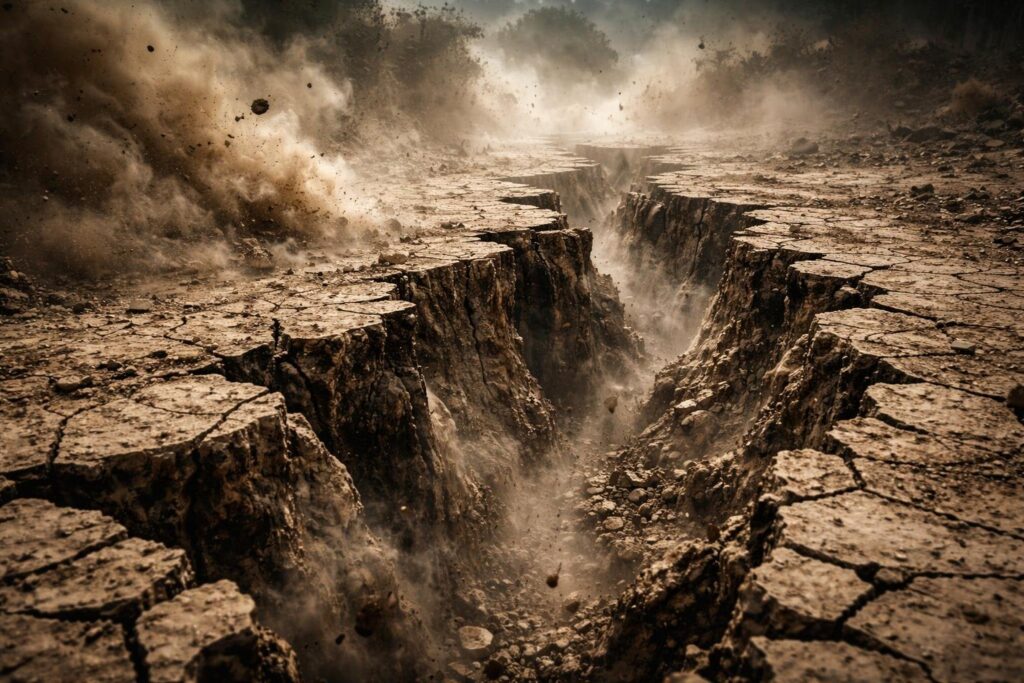
Thousands of small earthquakes happen daily, though most are too weak to be felt.
Fact 3: The strongest earthquakes are extremely powerful
Large earthquakes can release more energy than nuclear explosions.
Fact 4: The ground can move in different ways
Earthquakes can cause vertical and horizontal movement, depending on the type of fault involved.
Fact 5: They can trigger tsunamis
Underwater earthquakes can displace large amounts of water, leading to tsunamis. This is closely linked to events explained in our tsunami facts guide.

And it gets even more intense…
This process is closely connected to events described in tsunami formation.
Fact 6: Aftershocks can follow for days or weeks
After an earthquake, smaller tremors known as aftershocks can continue for long periods.
Fact 7: The Richter scale measures magnitude
Earthquake strength is commonly measured using scales that calculate the energy released.
Fact 8: The Pacific Ring of Fire is most active
This region experiences the majority of the world’s earthquakes due to tectonic activity.
Fact 9: Some earthquakes are barely noticeable
Many earthquakes are so small that they can only be detected by instruments.
Fact 10: Earthquakes can cause landslides
Strong shaking can destabilise land, triggering landslides and additional hazards.
And it keeps getting more fascinating…
According to research from the US Geological Survey, earthquakes occur when stress builds up along faults and is suddenly released as energy. View Source →
Fact 11: They can damage infrastructure instantly
Buildings, roads, and bridges can collapse within seconds during a major earthquake.
Fact 12: Earthquakes can occur anywhere
Although common near plate boundaries, earthquakes can also happen within tectonic plates.
Fact 13: Some earthquakes are caused by humans
Activities such as mining and reservoir filling can sometimes trigger minor earthquakes.
Fact 14: Earthquakes can change landscapes
Major events can permanently alter landforms and coastlines.
Fact 15: They can be linked to volcanoes
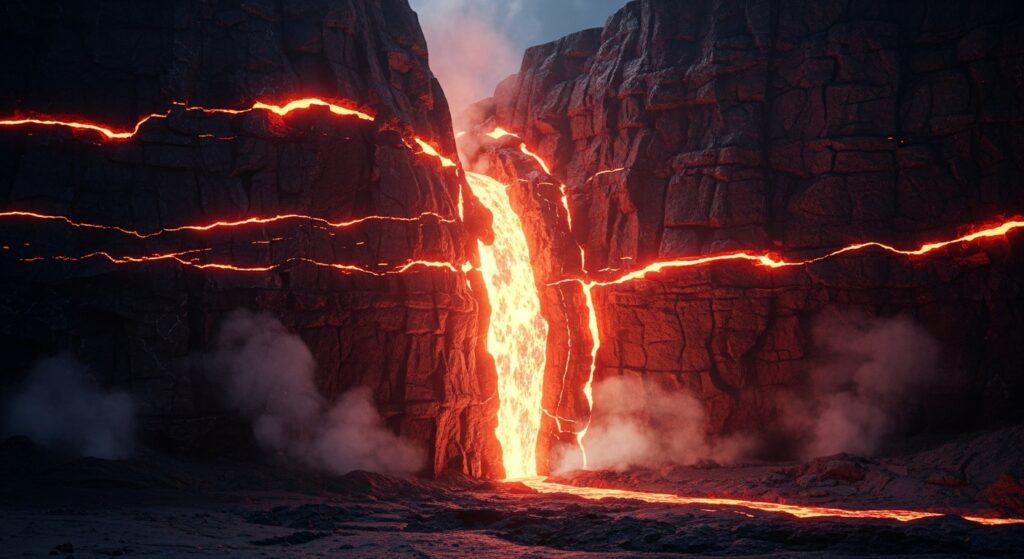
Earthquakes often occur near volcanic regions due to magma movement, similar to processes explained in our volcano facts guide.
And there’s even more…
These movements also occur in regions with volcanic activity, as explored in our volcano guide.
Fact 16: Seismographs detect earthquakes
Scientists use specialised instruments to measure and record seismic activity.
Fact 17: Earthquakes can last from seconds to minutes
Most earthquakes are brief, but their impact can be long-lasting.
Fact 18: Some regions are more prone than others
Areas near tectonic boundaries are more likely to experience earthquakes.
Fact 19: Earthquakes can produce loud sounds
Some people report hearing rumbling or roaring noises during an earthquake.
Fact 20: Scientists still cannot predict them accurately
Despite advanced technology, predicting the exact time and location of earthquakes remains extremely difficult.
According to Britannica, earthquakes can cause widespread damage and are among the most powerful natural events on Earth. View Source →
Explore More Nature
To understand more about these forces, explore how waves form in tsunami events or how pressure builds beneath the surface in volcanic systems. You can also explore everything in our nature facts hub.
Conclusion
These earthquake facts highlight just how powerful and unpredictable these natural events can be. From tectonic movement to global impact, earthquakes remain one of the most fascinating forces shaping our planet.
What are some interesting earthquake facts?
Earthquake facts include their link to tectonic plate movement, their ability to trigger tsunamis, and their immense energy release.
What causes earthquakes?
Earthquakes are caused by sudden movement along fault lines when built-up stress is released in the Earth’s crust.
How are earthquakes measured?
Earthquakes are measured using scales that calculate magnitude and intensity, often recorded by seismographs.
Can earthquakes be predicted?
Scientists cannot accurately predict earthquakes, but they can monitor seismic activity to assess risk.